
Not six subjects.
One way of thinking.
STEAM-H is an integration. Students explore each big idea through Science, Technology, Engineering, Arts, Maths and Humanities — then prove they understand it by building something real.
The H is what makes it 10X — Humanities ties it all together
One big idea,
every lens
Most schools teach six subjects in six separate rooms. STEAM-H brings them together — every big idea is examined through each discipline, so students see how knowledge connects.
Traditional timetable — subjects in silos
STEAM-H — integrated around one idea
Solve problems with intelligence and humanity
STEAM-H is one interconnected way of thinking, combining Science, Technology, Engineering, Arts, Mathematics and Humanities.
In the age of AI, knowledge alone is not enough. Students must learn to connect ideas across disciplines — and to ask not only can we build it, but should we, and for whom.
Built into
every unit
Four steps take every student from a question to something they can hold, demonstrate and defend in front of an audience.
Built into every unit
At least two STEAM-H tasks in every unit — integration is part of the timetable, not an extra.
Understand the concept
Concepts are taught by integrating the disciplines — subjects woven into one learning experience.
Build a proof of concept
Students prove they understand an idea by building something real — a tangible outcome, physical or digital.
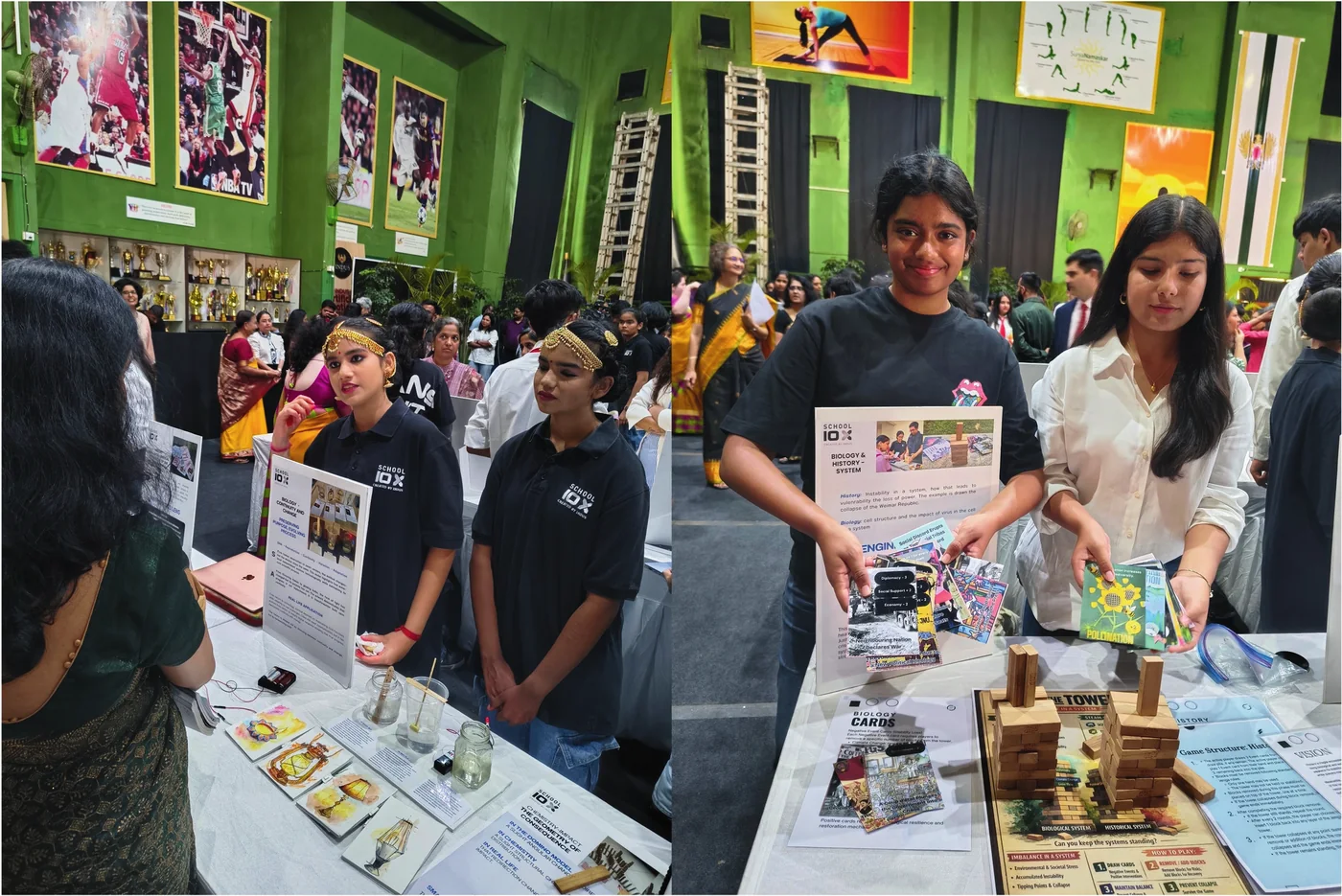
Showcase on Innovation Day
Students present their physical and digital projects publicly to parents and visitors.
Two subjects,
one new lens
Each project pairs two disciplines and looks at them through a third lens. Here is what that looks like in our classrooms.
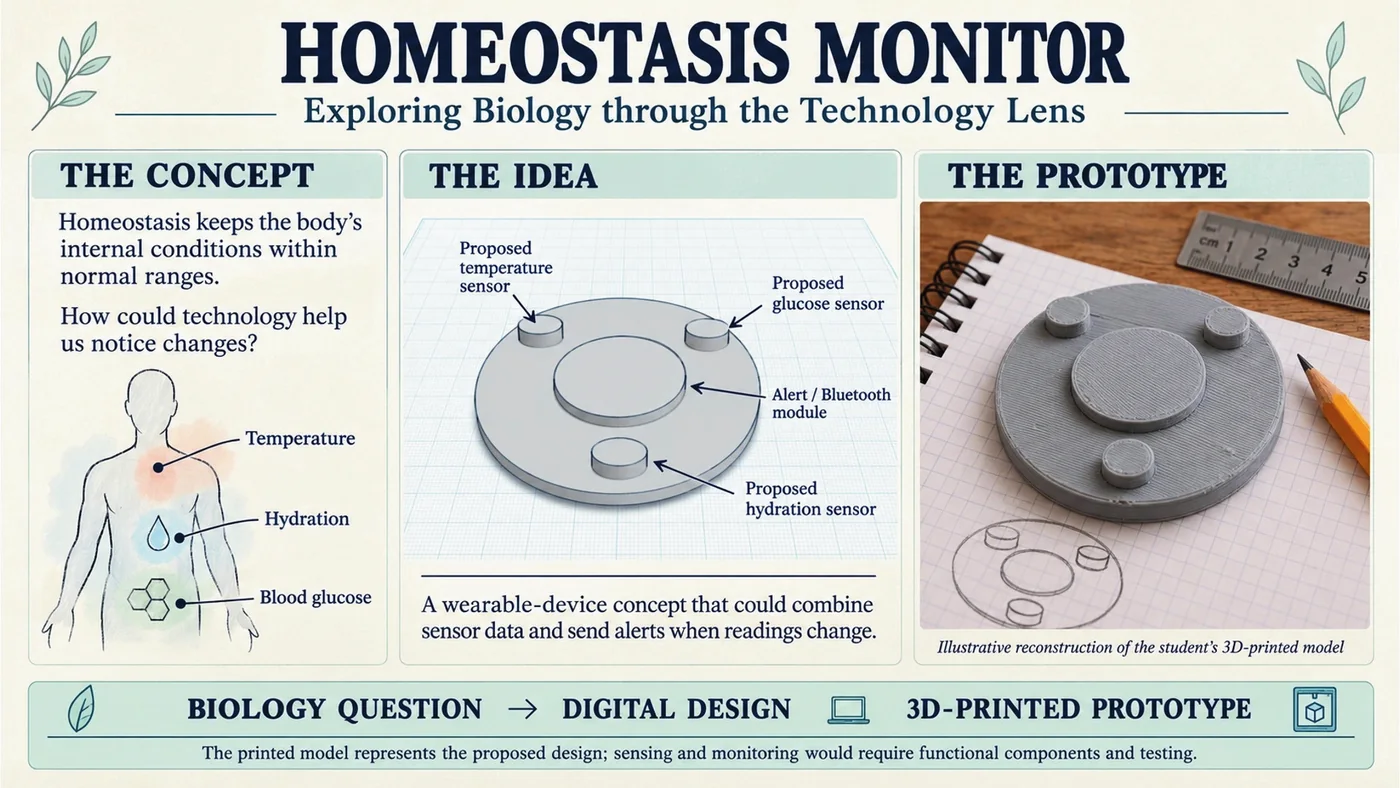
Homeostasis Monitor
How could technology help us notice when the body's internal conditions change? A student designed a wearable concept combining temperature, hydration and glucose sensors with an alert module — then 3D-printed the model.
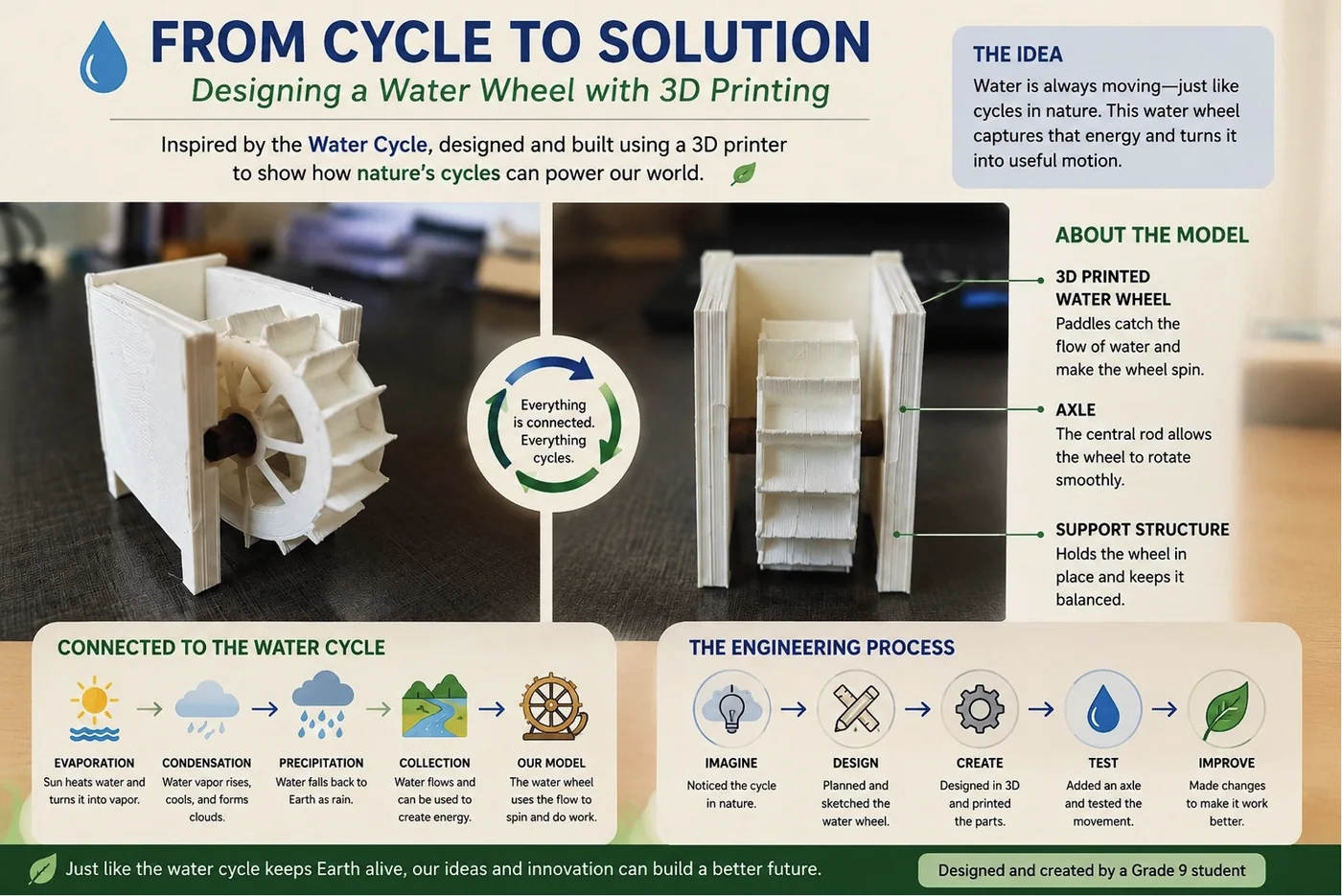
From Cycle to Solution
Inspired by the water cycle, a Grade 9 student designed and 3D-printed a working water wheel that turns moving water into useful motion.
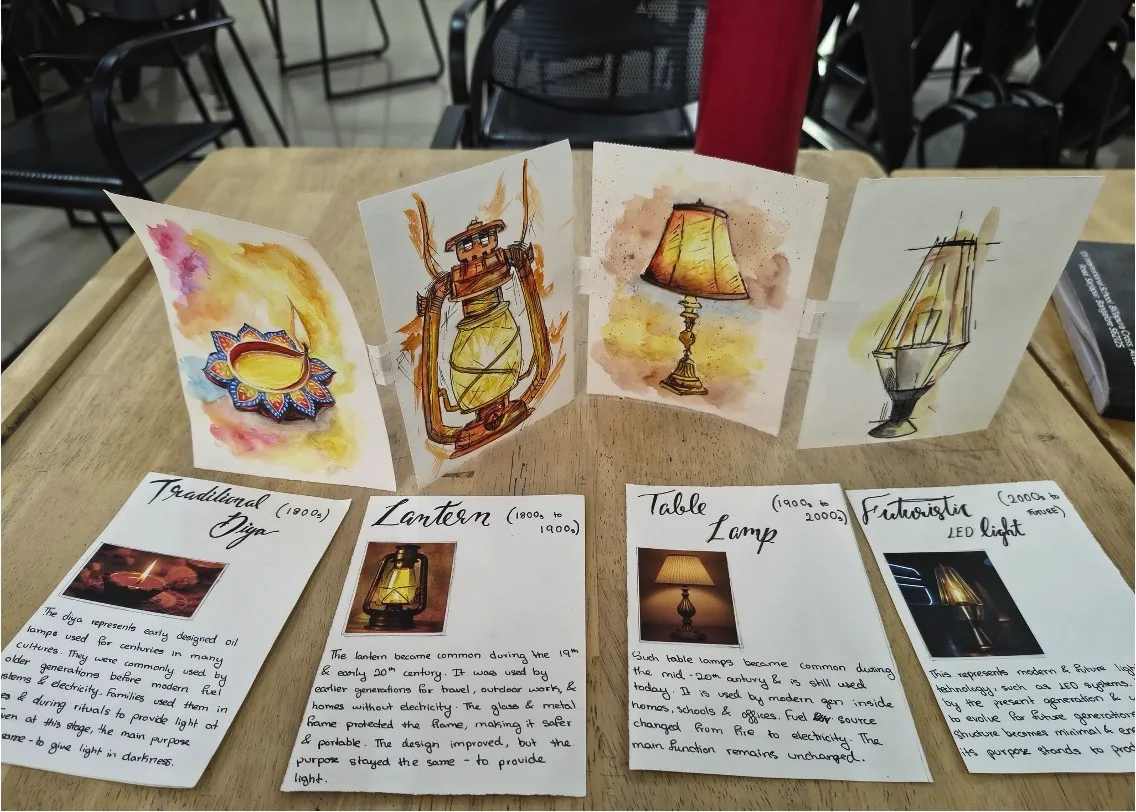
The Evolution of Light
A watercolour series traces how we light our world — the traditional diya, the lantern, the table lamp and the futuristic LED — showing how design changes while the purpose stays the same.
Opium War Card Game
Students used probability and distribution models to simulate the resource imbalances behind the Opium War.
Organic Chemistry & Structural Change
Small changes to a molecule's structure compared with small changes to an artwork's composition — both transform the whole.
Jenga: Systems & Collapse
Blocks become system variables to compare the collapse of the Weimar Republic with viral disruption of a cell.
BhashaBloom
A language-learning module built on research into neuroplasticity.
Anamorphic Artwork on Fairness
An artwork that looks distorted from one angle and balanced from another — a way into conversations about perspective and fairness.
Foucault Pendulum
A working demonstration of the Earth's rotation.
What students take away
- 01Deeper understanding
- 02Creative problem solving
- 03Real-world readiness
- 04Ethical consciousness
- 05Self-reflection
Humanities is the glue
Humanities gives every other discipline its meaning. As technology transforms how we learn, it keeps people at the centre of every idea our students build.
Intelligence
and humanity
See how STEAM-H turns big ideas into real projects, patents and published research.
Enquire Now →
